Today’s blog is a serious topic. It’s about
something that I-20 holders want to know. This information has been personally
exchanged with the person responsible for the SEVIS.
Since last year, the SEVIS Field Associate
(responsible for our school) has regularly come to visit the campus several
times. They come to share the latest rules and visa information regarding the
SEVIS, and to check that our school isn’t unusual at the same time.
Aside from that, the one question that we
are often asked by students is:
“Will I be able to get the 60 days Grace Period?”
The Grace Period is a sixty-day legal stay
within the country following the completion of your program. During this time,
a student must either transfer to another school, or leave the United States.
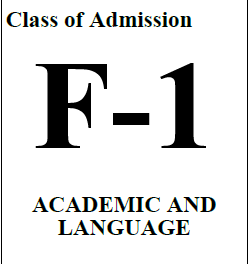
The one thing that students on an F1 visa tend to get incorrect is that they will automatically be entitled to the 60 days Grace Period if they hold a valid I-20. This is wrong.
Not everyone is entitled to the sixty-day
legal stay. To receive the Grace Period, a student must meet the requirements
outlined below.
Properly complete their program → this means they complete their program without failing, and while meeting the appropriate attendance rates.
For example, a student has enrolled in a twelve-week program. Imagine they have now transferred to another school in the middle of the program. This transfer is possible, but it means they haven’t completed their program in this case (since they have transferred) and are not entitled to the 60 days Grace Period.
In this particular case, the student has a
15-day legal stay within the country. During this time, they must either leave
the United States, or complete the transfer process to the new school and begin
their next program from the earliest possible start date.
If a student’s attendance is insufficient, and their I-20 is terminated by the school, they must leave the United States immediately.
As for transfers, the SEVIS advises that it doesn’t mean “It would be good to complete the transfer process within the 60 days, and start the program at your next school”, but rather, “If you want to transfer during the Grace Period, you should finish the application process promptly and start your new program from the earliest possible start date.”
It is vital for students staying in the
country on an F1 visa to take personal responsibility for maintaining their
status. (Especially regarding attendance)
Students who come to America on an ETSA are
able to stay for 90 days. Staying any longer than this will be an illegal stay
and this will remain on their record.
It is highly likely that applications for
visas from people with a record of illegal stays will be rejected. Please take
plenty of care.
Transfers between language schools are popular within America. As mentioned previously in this blog, it is possible for the transfer process to be completed by the student themselves.
■Transfer Process
Before the conclusion of your program, decide whether to extend the program at your current school or transfer to another
If you decide to transfer, choose the school you will transfer to
Proceed with the enrollment process of the school you will transfer to (fill in application forms, make payments etc; please follow the school’s procedure)
Submit required documents to your current school
Your current school moves your SEVIS record to your next school
This isn’t a difficult process, but some troubles have occurred from time to time.
■Astudent has forgotten to submit the documents, and their status changed to ‘Complete’.
The documents required to move your SEVIS record to the next school are the ‘Transfer Form’ and the ‘Acceptance Letter’ for the school you are transferring to.
The issues that occurred in a certain case are related to this.
A student who had completed their program submitted a ‘transfer form’. The staff filled out all the necessary information and handed the form back to the student. Despite being urged to submit the acceptance letter prior to the final day, it was not submitted. More than sixty days passed following the end of the student’s program, and their status changed to ‘Complete’.
As previously mentioned in this blog, in the sixty days following the end of your program date (in the case of our school, the last day of your I-20 validity is the end date of your program) you will enter a Grace Period. Students must either transfer schools during this period or leave the United States.
The SEVIS status will automatically switch from ‘Active’ to ‘Complete’ on the 61st day. Once a status has become ‘Complete’, the school can do nothing more. You need to leave the US immediately.
■Why is the transfer process incomplete without an ‘Acceptance Letter’?
Most schools mention the following warning on their ‘transfer forms’:
“Please do not release the student’s SEVIS record to us until our school DSO has confirmed acceptance of the student via a written Letter of Acceptance. This transfer Verification form is not a confirmation of acceptance.”
According to this warning, your current school cannot send your record to them unless both your ‘acceptance letter’ and ‘transfer form’ are complete.
Even if you complete your enrollment form and payment of fees, and the transfer process has been completed at the school you’re transferring into, whether or not your record is transferred depends on whether or not your documentation has been submitted properly.
At each school’s discretion, if a student’s SEVIS record has not been transferred despite completing the transfer process, the school may be able to contact the previous school and check the issue. However, not all schools will go that far.
NYEA takes a lot of admissions from other schools. After completing the enrollment process with us, we issue an ‘acceptance letter’ and we always ensure to send the ‘transfer form’ and ‘acceptance letter’ to the school the student is transferring from. We will contact the previous school in cases where the record has not been sent to us.
The transfer process is not difficult, but it’s a good idea to confirm the steps with the staff at your current or future school.
There are quite a few choices as to what
you should do with your cell phone while studying abroad. Which option is best
depends largely on the length of your studies, so let’s take a look at the
following before deciding.
For Short-Term Studies Abroad:
Option 1: Use your smartphone to connect to the free Wi-Fi at
schools, accommodation and within stations.
New York is
implementing free public Wi-Fi, so you will be able to use the internet at many
different places like libraries, stations, parks and traffic intersections.
Also, many cafes and fast food restaurants offer Wi-Fi as part of their
service. However, services such as these are not always high speed. One option
is to purchase a mobile Wi-Fi router.
** If you don’t
switch off your mobile data, international charges will apply**
Option 2: Use your local telco’s
always-connected overseas internet service
If choosing the
option to use an overseas internet service provided by your local company,
please contact the telco before coming to the United States.
Mobile Wi-Fi routers:
Local carriers provide prepaid services.
These are quite affordable, but their expiration dates are usually only a few
months. They are suitable for short-term studies but may not be useful for
long-term studies.
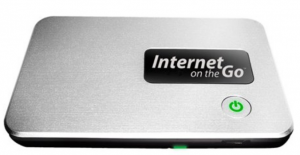
In America, it is possible to purchase
prepaid Wi-Fi routers with indefinite expiration dates. (e.g. Internet on the
Go)
It’s best to buy these along with a usage
fee voucher. The cost is split into two types: one for fixed-term expiration
and the other for indefinite expiration. The price also differs according to
capacity (around $10 to $50).
Example: $25 for 3GB with a 30-day expiry,
or 1.5GB with no expiry
For Long-Term Studies Abroad:
What do I do about the cell phone I use in my country?
Regarding your cell phone, you may cancel your current contract, or you may alter your plan, and have it placed on hold. In short, if you pay the minimum costs while you’re studying abroad, you can then return to your original plan after returning home. The companies au, Docomo and Softbank all offer a service to put your contract on hold without paying the hundreds of yen cancellation fee. With this option, there is no breach of contract fee, so it may be better than cancelling while you’re overseas. Please contact your telco for more information.
Option 1: Purchase a cell phone within the United States
Purchase both a
cell phone and a SIM card at your destination.
It is important
to note that if you set up a new cell phone, you won’t be able to let your
family members know your contact details etc. in advance. If you purchase a
device locally, all the instructions and information will be in English.
(*There is a service called “h2o by KDDI” to set up a cell phone and issue a phone number prior to leaving the country. Please contact us for more details.)
1. Purchase a pre-paid type cell phone that you can pay before using
You can buy
pre-paid phones if you have the payment fee and personal ID.
The best thing
about this type of service is that it does not require a contract, so you can
cancel it at any time you like. However, there are initial costs to purchase
the device. (The full price of the cell phone is paid at the time of purchase,
and this can vary from $50 to $800 depending on the device.) You purchase a SIM
card at the same time as the cell phone. Since there is important information
and numbers on the packaging of your cell phone and SIM card, we recommend that
you keep these and do not throw them away.
The major
American telco are:
Verizon
AT&T
Sprint
T mobile
Metro PCS, Virgin Mobile (specializing in prepaid)
Metro PCS and
Virgin Mobile specialize in prepaid services and are cheaper than the other
major companies, but they may not receive good signal in the suburban areas.
We recommend
pre-paid services since students without a social security number or a bank
account can easily use them.
Payments are
made from your own online accounts.
2. Purchase a
post-paid type cell phone
This is a regular contract type. Cancellations during the contract period will incur penalty fees. Since you will be required to show your social security number and other information, this isn’t convenient for students without a social security number.
Option 2: Unlock the SIM for your cell phone, and only purchase a SIM card in America
Insert and use the
purchased SIM card
If you’d like to use this
method, please contact your current telco.
To be able to use your
phone for this, the following conditions must be met:
1) The cell phone must
have been sold after May 2015
2) The period of use must
satisfy the minimum requirements for the telco
3) The cell phone must be
compatible with US frequencies
SIM unlocking your phone
is not always possible, depending on how long you have been using the phone.
Please ensure you unlock your phone at the specific company’s store or through
the support site. Some stores will charge fees of 1000-3000yen to do this for
you. Cheaper smartphones may be able to be SIM unlocked, but they also may not
support US frequencies.
Check that your phone is a
compatible model, and if there are no issues, purchase the correct SIM type for
your phone after arriving in the country.
Please note the following
points:
The type of SIM card differs depending on the model of Android, iPhone etc.
There may be difficulties connecting to US signals
SIM Cards:
A SIM card is a
card which holds information like your phone number etc, and once purchased, is
inserted into your device. In other words, a cell phone is unusable without a
SIM card. Up until recently, telco companies issued their own individual SIM cards
and set them to read only specific information (SIM lock). This made it
impossible for customers to switch to other companies.
In 2015, the
Ministry of Internal Affairs and Communications instructed all telco companies
to enable SIM unlocking, so now it has become possible to do so.
New York Wi-Fi
New York is one of the advanced internet
environments in the world.
In Manhattan, LinkNYC (a New York project
to replace the unused public payphones with public Wi-Fi) is everywhere. The
speeds are a decent 200Mbps.
To use LinkNYC, select “LinkNYC” from the
list of available Wi-Fi on your phone, then register your email address. The
certificate will be installed, and you will be able to use the internet
service.
In the subways, a free Wi-Fi service called
“TransitWirelessFree” is provided. Most buses do not provide Wi-Fi, but some
buses that run in the Bronx and in Queens do. Charging is usually possible.
There is free Wi-Fi on the NYC Ferry.
Additionally, free Wi-Fi is available all over the place, such as in cafes,
hotels, restaurants, museums etc.
Although the internet services in New York
are progressing, if you’d rather have easy access to the internet without
hassle, we recommend renting Wi-Fi or acquiring a cell phone in the United
States.
American Cell Phone Information:
In some countries, a fee is charged for
making a call, but not receiving calls. In the United States, fees are charges
both for making and receiving calls.
In the US, the contract would be “charges
for 0 minutes’ talk and 0GB of data”.
Please remember that if the person who
calls you talks for a long time, you will also be charges as the receiver of
the call.
Each situation is different depending on
whether your study abroad plans are long-term or short-term so consider all
your options before deciding what to do. Furthermore, ensure you contact your
current telco company.
January can be a tough month in New York
City. January can be a tough month no matter where you are, really. The winter
can start to really kick in, and the cold temperatures can make us feel
defeated and tired. The shorter days can definitely take a toll on our
attitudes and energy levels, so it’s important to keep yourself busy so you
don’t give in to the laziness of the winter. Of course, it’s nice to hibernate
sometimes, but it can also be easy to fall into the routine of staying in ALL
the time. (I’m guilty of this myself, so I can speak from experience here!) If
you can get past the dreary weather, January in the Big Apple can be really
fun!
Of course, while you’re here, you’ll want
to put your English skills to real-world practice, and there’s truly no better
location to do that. As I always say, New York City is the ideal cultural and
lingual melting pot, so you’ll easily be able to put your classroom skills to
use while you’re out and about in all kinds of ways. It might be difficult to
engage with others due to these hibernation habits, but trust me, you won’t be
bored!
1.Big Apple Circus, Various dates in January, Lincoln Center
Luckily, the circus is a universal language and experience. With all sorts of talents and spectacles, you can be entertained while staying warm indoors at the same time. Bring your friends so you can practice your English reactions, and if you’re posting on social media, practicing your social hashtags will also help you engage with other social media users on your experience. The best part is of course the food, so this is another way you can practice your English skills with vendors and other attendees. Find out what food and drink they’re serving, share your favorites, and be sure to post!
2.Beer, Bourbon, & BBQ Festival, January 18, Brooklyn Expo Center
Now this is an event that I’m interested in myself. I’m a huge beer fan, and I tend to lean towards bourbon before vodka or tequila, so this is interesting! Plus, in the dead of winter, there’s nothing better than some satisfying and comforting barbecue to warm your belly. At this event, you’ll be able to sample all sorts of brews and taste all sorts of barbecue mixed with plenty of onsite entertainment, like music and dancing. This is the perfect getaway for your friends to spend your day while staying warm – and the bonus is you’ll get to try all different kinds of tastes from all over the country. Not only will you learn a lot about the food and drink, but you’ll have the opportunity to socialize with other event-goers and put your English speaking skills to use. This event costs to get in, so be sure to bring your wallet!
3.Winter Festival, FrostFest, starting January 25, Bryant Park
If you’ve been
in New York City for a while, it’s likely that you’ve heard about this event
for some time. Even though the festive holidays are over in January, there is
still plenty to see and do in the outdoor parks. Bryant Park especially goes
all out when it comes to winter celebrations, as the park is transformed into a
winter wonderland, complete with ice skating, karaoke, live music, and now
bumper cars on ice. This location draws in people from all over the city to
participate in the festivities, so I recommend planning ahead if you’re
interested in this. (I recommend avoiding the weekends if you have the ability,
as families will arrive with their full party in tow – if you can, check it out
in the middle of the week). There are tons of happenings over the week that
it’s open for this celebration, so be sure to plan ahead and pick out what you
want to participate in the most! And of course, attending is a great way to put
your English skills to use as you interact with others in attendance.
No matter what, being in New York City in
January can sometimes be tough. The holidays are over, people are back to work,
and the kids are back in school. But you’re still in the greatest city in the
world, so do what you can to make the best of it, even in one of the most
brutally cold months of the year!
As long as your student visa remains valid (even if your I-20 has expired) your stay in America may be mistakenly considered a legal stay.
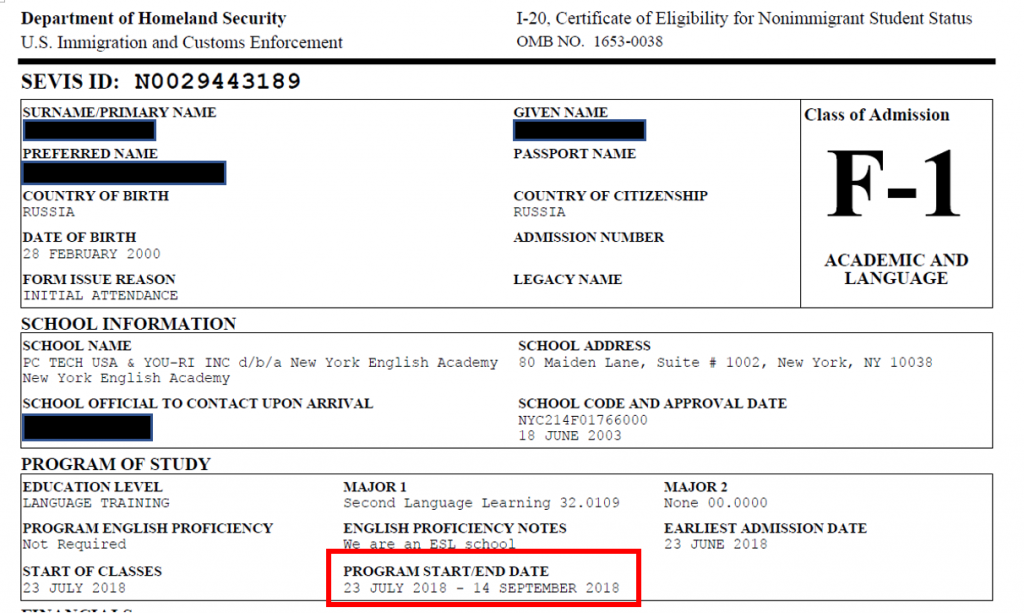
The I-20 form is attached to the F1 visa. Your I-20 must be valid for the duration of your study. The validity period is stated on the first page of the I-20 form.
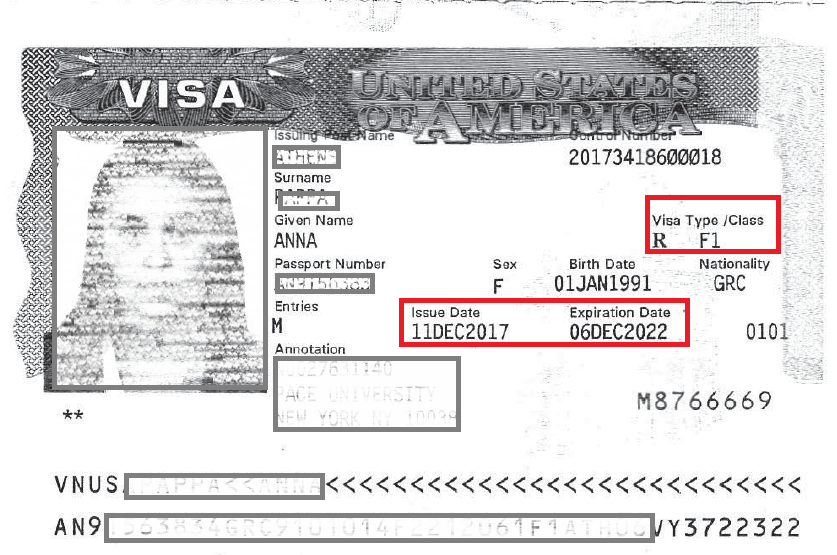
The validity period of your visa is stamped on the visa page.
These two periods of validity are not necessarily limited to one another.
Let’s consider an example where the student has enrolled in a six-month program. The I-20 document states a validity period of 6 months; however, the F1 visa has been approved for a period of 5 years.
*There may be some cases where schools allow a validity period of one year or more even for a six-month enrolment. Each school’s policy differs on this*
The most important thing for students holding an F1 visa is to ensure that they also have a valid I-20. If the validity period expires on their I-20, they must do one of the following:
Transfer into a different school within 60 days from your current program ending date
Leave the United States within 60 days from your current program ending date
Have the I-20 renewed at the current school (this may or may not be possible)
The abovementioned 60 days are referred to as a “grace period”. If a student completes a program at their enrolled school, they will receive a legal-stay period of 60 days.
In cases students are terminated by the school with some reasons, then they do not receive this 60-day period and they may be unable to transfer to another school.
If, during the 60-day grace period, a student does not go through the procedure to transfer schools and remains within the US, their stay will become an illegal one.
In cases where a student’s program has finished but they wish to continue their studies in the US, we ask that they extend their program and acquire an extension of their I-20 from their school. Students should always ensure that they personally retain their currently valid I-20.
The extension procedure at the New York English Academy is as follows:
Complete the application form for the next program
Prepare the certificate of bank balance
Pay the fees for the next program
Even if your visa expires while you are residing in the United States, as long as you hold a valid I-20 your stay will be a legal one. It will not become an illegal stay.
However, if you temporarily leave the country and re-enter, you will require a valid visa and will need to go through the visa extension procedures.
It is not possible for students to extend their visa within America, so they will be required to do so from outside the country or from their home country. Please contact your individual schools for the documents necessary for a visa extension application. The New York English Academy will assist you with any documents required to avoid any issues with your visa extension, including your transcripts and a support letter from the school.
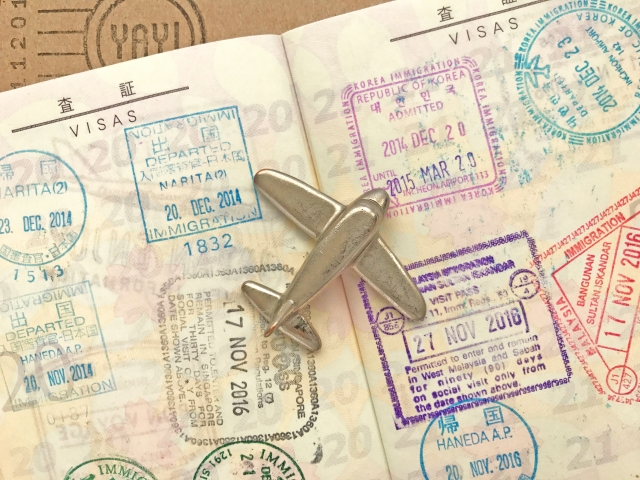
Entry into other countries basically
requires both a visa and a passport.
The first thing that is essential for
passage into a foreign country is a passport. Without a passport, you will be
unable to leave Japan. However, even though you’re able to leave Japan with
just a passport, you may not be able to enter other countries. A “visa” is a
document which allows entry to specific foreign countries, like an entry
permit. Once a visa is issued, it is attached to your passport.
Visas are split into many different types. We
will be explaining the different kinds of American visas. The two main
categories are “Non-immigrant Visas” and “Immigrant Visas”.
A Non-immigrant Visa is a visa that allows you to stay in the United States for a
specified period of time to accomplish a specified purpose. This is applicable
for those who are tourists, students, businesspeople or special workers etc.
An Immigrant Visa is a permit to allow you to reside in the United States on a Green
Card or after applying to be an American citizen.
Usually, those studying abroad will be
under the “Non-Immigrant Visa” category. Non-Immigrant Visas are divided into
various types according to the purpose of the traveller.
Commercial/Tourist Visa (B1/B2 Visa): Short-term entry visas for business, travel or medical treatment
purposes.
Employment Visa (H1, L, O, P, Q Visa
etc): Visas that permit legal employment. These are
visas for working within the United States. Depending on the type of work,
these visas are split into different types; e.g. special skilled laborers,
internal transfers, artists, entertainers, athletes etc.
Student Visa (F1/M1 Visa): Visas for studying abroad.
Exchange Visitor Visa (J Visa): A visa for those participating in exchange programs such as training
programs and internships etc.
Transit/Cruise Visa (C/D Visa): Visas for the staff and crew of planes and ships entering and
landing in America.
Religious Activist Visa (R Visa): A visa for those undergoing religious activities.
Employee Visa (B, A, G Visa etc): Visas for those travelling with an employer; these are divided
according to the visa status of the employer. This applies to people such as
butlers, drivers, housekeepers, assistants, gardeners, diplomats and government
officials etc.
Press Visa (I Visa): A visa for news media (who are based in foreign countries) to
temporarily stay in the United States.
Treaty Trader/Investor Visa (E Visa): A visa for residents of countries that have treaties and investments
with America.
Spouse Visa (K Visa): A visa for those who are engaged to a U.S. citizen and wish to gain
permanent residency in America.
You will need a visa that matches the
purpose of your stay in the United States.
Generally, to study abroad, apply for a
Student Visa (F1 or M1 Visa).
All visas have specific accompanied
documents.
For example, the J Visa has the DS-2019
document, and the H Visa has the I-129 document. In the case of the student
visas, this document is called the I-20 form.
Both the F1 and the M1 are Student
Visas.
For general university and language school
studies, you’ll need the F1 Visa. For specific professional studies or
training, computing, IT classes etc, you’ll need the M1 Visa. Students who
attend the New York English Academy will have an F1 Visa.
When entering the United States, you
must go through Immigration. (Specific to the JFK airport)
The procedure for entering the United
States is as follows:
Arrival of the plane
Immigration
Baggage collection
Customs
Airport arrival lobby
Go through Immigration once your plane has
landed. This will be split up into two lanes, one for American residents and
one for foreign residents. Line up in the lane for Non-US Citizens.
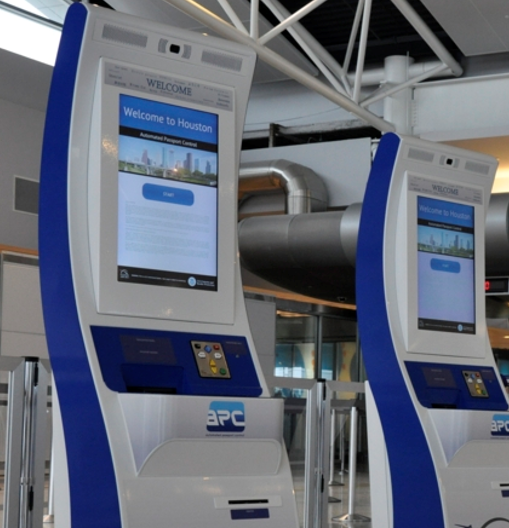
Immigration at the JFK Airport in New
York City has kiosks. (Some other airports may not have kiosks)
The John F. Kennedy Airport is a large
airport which serves as the gateway to the East Coast of the United States, with
many international visitors. The “APC KIOSK”, or Automatic Passport Control
Kiosk, has been implemented to cut down on immigration.
<Immigrants who can use the
kiosks> Those who can use the kiosks do not need
a customs declaration form.
People who have an ESTA and
have entered the U.S. after 2008
U.S. citizens
Permanent residents of the U.S.
Canadian citizens
<Immigrants who cannot use the
kiosks>
People entering for the first time with an ESTA
People who have entered with an ESTA after 2008 but have renewed
their passport
People on a student or work visa
People who have been directed by personnel to use the immigration
desk
[Using the Kiosks]
Choose your language
Scan your passport on the screen
Answer the U.S. Customs questions
Answer ‘yes or no’ for ESTA registration
Fingerprint scan
Photo taken
Confirm travel companions
Confirm arrival flight information
Once everything has been completed, a
receipt will be printed, and you will need to line up for Immigration. This is
a simple lane just for showing your documents, and it means there are no issues
with your entry. However, if there is a cross on the printed receipt, you will
need to proceed to the same in-person immigration examination as other visa
holders.
Sometimes this cross is displayed if your
photo or fingerprints are not taken correctly.
Immigration Procedures
For immigration, you will need a passport
containing the correct visa, and the accompanying documents for that specific
visa. (In the case of a Student Visa, the I-20 form). Submit these to the
immigration officer.
Having a visa does not necessarily mean you
can enter the country. The immigration officer will allow your entry by
checking your visa type, your purpose for visiting, and whether or not your
documents have expired. At this time, the immigration officer may ask you some
questions.
Purpose of visit
How much money you have
How long you plan to stay
Where you will be staying
If nothing is checked, the immigration
procedure is over. If there are any issues or some of your documents are
missing, more checks will be necessary, and you will be led into a separate
room. This procedure will take a considerable amount of time, so please ensure
your documents are completed prior to immigration.
Please refer to the following video for an
explanation.
Please note that circumstances and
procedures will differ with each airport.
Once you have gone through Immigration,
collect your luggage and proceed to your destination. The New York English
Academy offers “First-Day Immigration Support” as an option. There is also a
pick-up service to take you to your accommodation.
*First-Day Immigration Support: We will
pick you up from the airport and take you to your accommodation. Once you have
dropped off your belongings, we will show you around the facilities and areas
you will be using during your time here. This is the recommended option for
those coming to New York for the first time.
List of Useful Things for Studying Abroad (Long-term studies, short-term studies, things useful for the year)
Ear cleaners/nail clippers
Laundry bag and detergent
Toothbrush
Disposable slippers or
indoor flip flops
Paper toilet seat sheets
Travel-sized umbrella
Overseas power conversion
plug adapter
Watch/alarm clock
Electronic dictionary
Medicine (your own)
Electronics (PC, laptop, tablet)
Cell phone
Sanitary products, cosmetics, sunscreen, hand mirror, shaver
Pocket tissues/wet wipes
Disposable masks
Powders such as Pocari Sweat (dissolvable)
Canned and sealed foods
Bath towel and face towel
Backpack
Photos of your family, of Japan etc: useful for introducing yourself
and Japan
Hats/sunglasses
Chopsticks
Travel guidebook
Writing utensils and stationary (3-color pens etc)
Athletic shoes and clothing
Clothes for formal situations (e.g. suits) (especially for long-term
studies)
Easily worn clothing (e.g. cardigans and parkers)
Portable sewing supplies
Rubber bands (New York rubber bands are poor quality and will break
easily)
Glasses/contact lenses and cleaners
Things you can purchase while studying
abroad (or you can bring with you)
Hair dryer
Shoes
Shampoo/conditioner etc
Things to bring depending on the season
(can be purchased in New York)
Winter (October to April)
Pocket warmers
Hats
Gloves
Scarves
Heat-tech clothing
Coat
Blankets
Thick socks
Lip balm
Windbreaker
Spring (May to June) and Autumn
(September to October)
Hayfever medication
Clothing that can be easily
layered
Summer (June to September)
Swimwear
Beach sandals
Sunscreen
Folded fan
List of Carry-On Baggage on the Plane
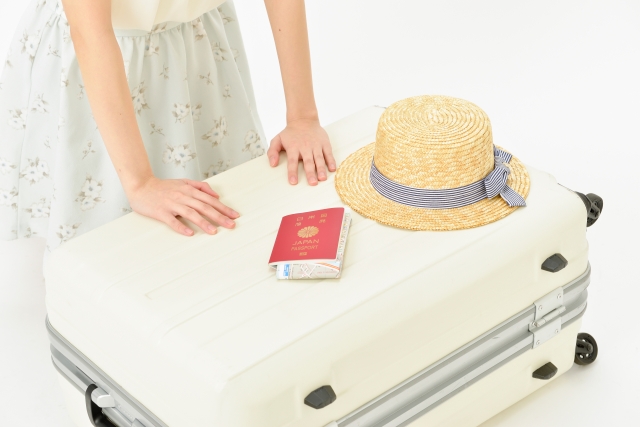
Passport
I-20 form (for students traveling on a student visa)
Cash (both Japanese yen and local money): It may be convenient to put these in separate wallets
Credit card: VISA or Mastercard are recommended. JCB, American Express and Diner’s Club Cards are not always accepted
Study abroad insurance: for more details, click here
Bank cards that allow overseas withdrawals: your own cash can be withdrawn from a Japanese bank account. The exchange rate will be applied at the time of withdrawal. For more details, click here
Ballpoint pen and small notebook
Plane ticket
Cell phone: for more details, click here
Computers and tablets: it is recommended that these are not placed in checked-in baggage
Tissues, handkerchief
A copy of your address details
Other things to note:
On long flights, the cabin is very dry. It might be good to bring some lotion or moisturizer.
Depending on the airline, plane cabins can get very chilly. It might be good to bring some light outerwear, like a cardigan.
Make a note of your passport number in a notebook or on your cell phone. This number is required when filling out entry forms like the customs declaration form. Losing your passport causes a lot of issues, so it’s a good idea to just take it out at Immigration.
Make copies of all important documents and credit card information. If these are lost, you will be able to sort everything out without panicking.
Please ensure you check baggage restrictions with your airline. Usually, one bag is around 23kg. Liquids need to be 100ml or less and kept in a transparent sealed bag.
Check the local weather before your arrival. If the weather is going to be bad, it may be useful to put a portable umbrella in your carry-on luggage.
If you have arranged for transport, keep a note of the contact details. If you have any issues or cannot contact the driver, you can contact us without any problems.
Don’t carry too much cash on you. Credit cards are widely used for local purchases. (Preparation of money while studying abroad)
No matter how long you’ve been in New York City, you probably know that New York City celebrates practically everything, and we practice everything in a BIG way. That’s why when October rolls around, everything turns spooky with Halloween, and people get excited about the cooler temperatures and all the outdoor activities that come with the month of October. From pumpkin and apple picking to hayrides and haunted houses, even the most adult-like people here in the Big Apple turn into the biggest excited kids.
The great part is that everything that’s available in New York City offers you the chance to put your English language skills to practical use while you’re taking advantage of all these great activities. Be sure to gather all your friends to figure out what’s the most appealing to everyone, and get out there! Interact with other event-goers over the weekend, and find out what they’re checking out. It’s a great way to learn new social phrases, you can learn new hashtags to find out what’s trending in your area, and best of all, you’ll learn more about the city and the English language than you even imagined! While October has plenty to do thanks to the cooler temperatures and the excitement in the air, here are just a few things to check out this month – and you’ll probably see me there, too!
2nd Annual New York Pizza Festival, Saturday, October 5th – Sunday, October 6th, Crescent Avenue, Bronx
If you’ve got this weekend open, be sure to make your way to this amazing, pizza-filled event. With over 25 pizza makers in attendance (five are from Italy!), you’ll be sure to get as much pizza in your belly as possible. With tons of options available as well as drinks and entertainment, you won’t want to miss this amazing event. This is also a great time for you to test out your English skills with other event-goers, but if you have your translation app out, you also may want to add Italian to your rotation this weekend—surely you’ll be hearing a lot of Italian phrases, so this is a great way to test your skills in another language, too!
New York City Wine and Food Festival, Thursday, October 10th – Sunday, October 13th, various areas in Manhattan
If you’re a foodie and looking to mingle with the best of the best in the culinary world, this is your event. This is the largest food and wine festival in New York City, with over 80 spots around the city taking part in this huge event. This event is wildly popular and attracts people from all over the world, so if you’re interested, be sure to save up and plan ahead if you want to get your money’s worth. Come prepared with some of your most common English phrases, but since there will be plates from all over the world being features, it also might just be helpful to have your translation app set to multiple languages just in case!
Harvest Fest and Pumpkin Patch, Sunday, October 13th, Queens Botanical Garden
It wouldn’t be October without something to do that’s related to pumpkins! Halloween tends to take over the city for the entire month of October, but in this location, you can catch a break from the scaries and just enjoy the fresh air with the pumpkins. Take part in live music, join nature walks, and even enjoy some beer or cider in the field. It’ll give you a break from the day-to-day bustle in the city, and you’ll truly feel like it’s autumn here. Bring your friends for a day of fall, and be sure to practice your favorite English phrases about lovely weather, autumn happenings, and even questions about features the garden has to offer.
By now, you guys should know that the fall is my favorite time of the year, and there’s something so wonderful about it while in New York City. My mood is lifted, and I’m much more apt to get outdoors and experience the fresh, autumn air. Central Park is beautiful this time of year, and it’s a great opportunity for a picnic in the field or a long walk along the paths. You’ll love watching the leaves change color, and as always, the scenery is wonderfully Instagram-worthy – and what better way to practice your English than seeing what kind of clever hashtags you can include! Happy Fall, readers!
When learning a new skill or subject, it’s pretty customary to start in the classroom. Finding out the history of a discipline is a typical introduction to your area of study so that you can get a grand idea of the evolution of your focus. From there, however, as you advance in your studies, it’s also customary to branch out into the real world to better understand real-world implementation and integration.
This is easily applicable for learning a new or foreign language. When you’re in the beginning stages of learning the basics, classroom application is the best avenue for logistics and application. As you advance in your studies, you’ll want to practice your real-world application for a better idea of where your strengths lie and how you can improve in other areas. This means it’s a great idea to immerse yourself in the real world to put your skills to use and interact with other people.
If you’re considering a career in TESOL to not only enhance and perfect your English-speaking skills but also elevate your teaching abilities, there’s truly no better place than New York City to get your training. The New York English Academy is located in the heart of the Big Apple, meaning you can be exposed to expert native English speakers but be immersed in one of the largest cultural hubs in the world.
Value of the TESOL Program
If you plan on pursuing the academic track of gaining your TESOL certification, the New York English Academy organizes the program so that courses are instructed by English-speaking teachers, guaranteeing that you’ll get an organic learning experience. Plus, the program is set up so that there are different learning methods incorporated so that you can practice your skills in a variety of sets, from group work to role playing to even scavenger hunts. Everyone learns differently, so the TESOL program is designed to cater to all of those varying learning methods.
New York City is a culturally diverse place to be, with individuals from all over the world coming to experience the greatest city in the world. This means that there are hundreds of languages being poured into the neighborhood on a regular basis. When you’re out and about in the city, no matter how strong your English language skills are, it’s the perfect opportunity to put your learnings to use. You’ll likely run into others that speak a language other than English, which will also help you understand how you can communicate with your body language – which is helpful no matter where you are or what language you speak!
New York City: The World’s Melting Pot
Even if you’re still trying to perfect and polish your English skills as a member of the TESOL program, you’ll have the opportunity for PLENTY of real-world experience and application right here in New York City. Because the city itself is a huge cultural melting pot, you’ll be exposed to so many different people with endless backgrounds. Given your ability to speak at least two languages, you might be able to help others that have no English experience at all, putting your own personal English skills to use. In the process, you’ll learn about other cultures, which will help you bring those learned experiences back to your classroom both as a student and as a future educator yourself.
New York City is always different and is constantly changing. You’ll experience things that you love and things that aren’t necessarily your favorite. This aligns with the TESOL program at the New York English Academy. Because everyone learns differently and absorbs information in various ways, the program is designed to cater to all these different teaching and learning methods so that not one student is in the dark. Aligning with these experiences in New York City means that you will easily approach your eventual teaching abilities with the same flexibility and patience, allowing your students to find their own best personal method.
Why New York English Academy
American English is now the standard English dialect, moving away from UK English. With that said, learning this dialect in the heart of not only American culture but international culture means that you can take your learned skills and apply them to the biggest cultural melting pot in the world: New York City. Not only will you love your experience in the Big Apple, but your learned skills will be best put to use and you’ll thrive!
Listen, I know I’ve said this before, and I’ll say it every year. Summer is NOT my favorite season. I like the emotional feeling of summer – feeling free, having the longer days, taking vacations, and all that good stuff. But weather wise? NOT my favorite time of the year. I’m fair-skinned, and I’ll admit, I do in fact have a low tolerance for extreme heat. So with that, I tend to get sick of the summer season pretty quickly and start looking forward to fall by the middle of July. But even then, August is the epitome of the dog days of summer. The hottest days of the season tend to fall in this month, so my biggest recommendation for you this month is to enjoy the outdoors, but also prepare for activities that will be indoors to take advantage of the air conditioning and relief from the sun.
Because of this heat, many people tend to take their summer vacations during this month and flock to areas with beach access. The city tends to quiet down because of this, which means it’s a great opportunity for you to explore and grab your friends for ways you can practice your English skills. This month, I’m including things to do that are indoors, so if you’re anything like me, you can get through this last round of summer without feeling like you’re going to pass out.
The Rolling Stones, August 1, 2019, MetLife Stadium
No matter where you call home or what language is your first, you know that The Rolling Stones are one of the most iconic musical acts of our time. Around since the 1960s, this group has evolved throughout the decades to be one of the most legendary faces of rock and roll. As these group members age through time, it might be a great idea to see them now, as we’ll never really know when their next tour will be their last. Catch them while you still can! If you can’t make the show, you can do the next best thing and listen to their full portfolio – it’s a great way to get familiar with their music AND give your English skills a true through song!
New York Cocktail Expo, August 18, 2019, Long Island City, NY
As I mentioned above, there’s a spirit about summer that just means taking a load off and enjoying your time away, either from school or work. And truly, what better way to enjoy the summer than attend an event that’s all about mixed drinks?? Gather your friends for the day and arrange a ride home beforehand so you won’t have to worry about after a day of tasting and sampling new spirits and cocktails. As the most attended cocktail event in New York, you can interact with hundreds of other people from all over the city to find out what their favorite drinks are, what they learned, and their advice for making the most of your day. Be sure to hydrate and drink plenty of water this day!
Color Factory, SoHo
Originally created and celebrated in San Francisco, this collaborative experience has now migrated to New York City. It’s a huge celebration of color, which will make you feel alive and excited with all of the visions. If you’re serious about your Instagram, this is a great destination for you, as you’ll have plenty of opportunities to show your followers what you’re up to in New York City. A great way to not only meet more people is to include English language hashtags in your posts so you can interact with others that experienced the exhibit and learn how they appreciated the event.
New York City is the city that never sleeps or calms down. It’s also a heat box in August, so I of course recommend always having a plan for staying indoors to escape the heat. Just as there are endless things to do outside, there are also plenty of opportunities to stay cool indoors. From museums and restaurants to expos and pop-up events, you really won’t have to worry about running out of things to do. Worst case scenario, you can also just save your money and stay indoors and catch up on your Netflix queue – what better way to get your English listening skills in! Get your friends together, and come up with a plan for the hottest month in New York City – and be sure to hydrate this month!