









Your Best Tool for Abroad & Learning English

Your Best Tool for Abroad & Learning English

  1. How to Choose the Right English School


    New York City is one of the most popular destinations in the world for international students who want to learn English. With its diverse population, international business environment, and vibrant culture, the city provides countless opportunities to practice English in real-life situations. For students planning to study in the United States, finding the best ESL school in New York is an important step toward achieving their language learning goals.
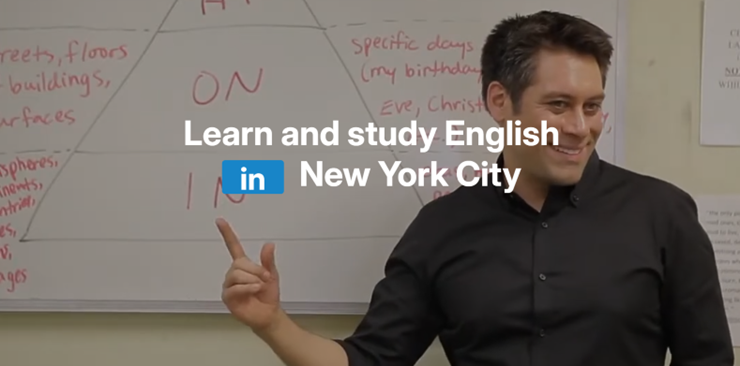
    There are many English language schools in New York, so choosing the right one can sometimes feel overwhelming. Understanding what makes a high-quality ESL program can help students select the school that best matches their academic needs and personal goals.

    Why New York Is One of the Best Places to Study English

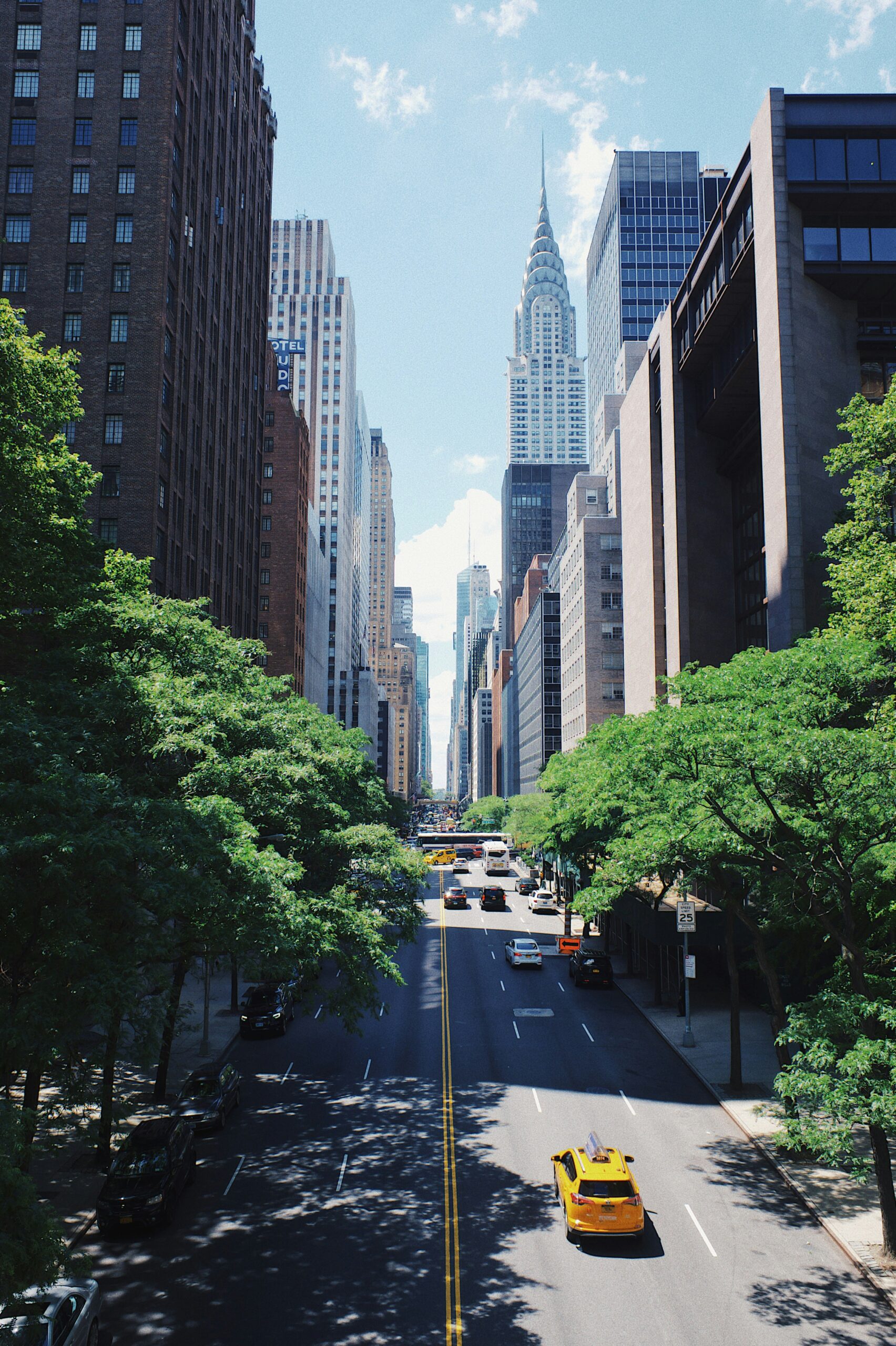
    New York is one of the most international cities in the world. People from many different countries live and work in the city, creating an environment where English is used in many different contexts every day.

    Students studying English in New York are surrounded by real-world communication opportunities. Whether ordering food at a restaurant, asking for directions on the subway, or attending cultural events, students constantly practice their English skills outside the classroom.

    New York also attracts international students and business professionals from many different countries. Because of this global environment, students not only learn American culture but also experience many other cultures and develop a broader global perspective.

    In addition, students can visit famous landmarks such as Central Park, Times Square, and the Statue of Liberty while improving their English skills.

    This combination of classroom instruction and real-life practice makes New York one of the best places to learn English in the United States.

    What to Look for in the Best ESL School in New York

    When choosing the best ESL school in New York, students should consider several important factors.

    Accredited and Licensed ESL Schools

    When choosing an ESL school, it is important to confirm whether the school is properly licensed by the New York State Education Department and, if applicable, accredited by recognized organizations in the United States.

    Schools that are licensed and accredited have undergone strict evaluations of their programs, faculty, and facilities. These standards ensure that students receive high-quality education in a structured and reliable learning environment.

    On the other hand, some schools may operate without proper authorization. To avoid potential risks, students should always verify that the ESL school they choose is officially approved and meets regulatory requirements.

    Experienced ESL Instructors

    Qualified teachers are one of the most important elements of a successful ESL program. Experienced instructors understand how international students learn English and use teaching methods that help students improve their communication skills effectively.

    Teachers who specialize in teaching English as a second language can guide students through grammar, conversation, listening comprehension, reading, and writing in a structured and supportive way.

    Student-Centered Classes

    The best ESL schools focus on student-centered learning. This means that students actively participate in discussions, group work, and communication activities instead of only listening to lectures.

    Student-centered classes help learners build confidence and improve their ability to use English in real conversations.

    Programs for Different English Levels

    A strong ESL school should offer multiple levels of instruction, from beginner to advanced. Students should be able to start at the level that matches their current ability and gradually progress as their English skills improve.

    Some schools also offer specialized programs such as academic English courses or TOEFL preparation classes for students planning to attend college in the United States.

    Convenient Location

    Location is another important factor when selecting an English school in New York. Many students prefer schools located in Manhattan, where public transportation is convenient and students can easily explore the city.

    Being close to major transportation hubs allows students to commute easily and experience the city while studying.

    Study English at New York English Academy

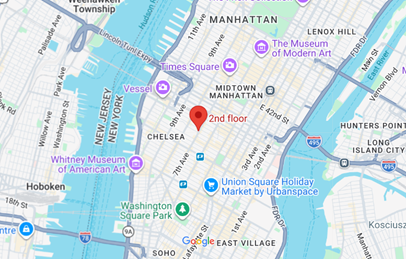
    One school that offers high-quality English language education is New York English Academy, an ESL school located in Midtown Manhattan.

    The school offers structured English programs designed for international students who want to improve both their communication skills and academic English ability.

    Key Features of New York English Academy

    • Licensed by the New York State Education Department, accredited by ACCET, and authorized by SEVIS for F-1 student visas.
    • Located in Midtown Manhattan, just 5 minutes from Penn Station
    • Standard English Program: 18 hours per week
    • Small class sizes with personalized instruction
    • Licensed instructors approved by the New York State Education Department

    The Standard English Program focuses on essential language skills such as grammar, conversation, listening comprehension, and reading. Classes are designed to encourage interaction and participation, helping students build confidence when using English in real-life situations.

    Students who plan to continue their studies in the United States can also enroll in TOEFL preparation classes to develop the academic English skills necessary for university admission.

    If you want to learn more about studying English in New York, you can also read our guide:
    “ESL School in New York – Study English at New York English Academy.”

    F-1 Student Visa ESL Programs in New York

    Many international students choose to study English in the United States using an F-1 student visa.

    New York English Academy is authorized by SEVIS and can issue Form I-20 for eligible international students. This allows students to study English full-time while experiencing life in New York City.

    The school has a team of five Designated School Officials (DSOs) who monitor and support the immigration status of F-1 students throughout their studies.

    The admissions team also assists students during the application process, helping them prepare for their English learning experience in the United States.

    Start Studying English in New York

    Choosing the best ESL school in New York is the first step toward achieving your English learning goals. A high-quality ESL program provides not only classroom instruction but also opportunities to practice English in everyday situations.

    New York English Academy offers a supportive learning environment where international students can improve their English skills while living in one of the most exciting cities in the world.

    If you are planning to study English in New York, New York English Academy welcomes students from around the world.


    FAQ – Best ESL School in New York

    What is the best ESL school in New York?
    The best ESL school offers experienced instructors, student-centered classes, and programs designed for international students at different English levels.

    Can international students study English in New York with an F-1 visa?
    Yes. Students can study English in New York with an F-1 visa if the ESL school is authorized by SEVIS and can issue Form I-20.

    How many hours do ESL students study per week?
    Most full-time ESL programs, including New York English Academy, offer around 18 hours of instruction per week.

    Why is Manhattan a good place to study English?
    Manhattan offers convenient transportation, international business environments, and many opportunities to practice English in real-life situations.

  2. ESL School in New York:
    Study English at New York English Academy


    New York City is one of the best places in the world to study English. With its diverse population, international business environment, and vibrant culture, the city provides countless opportunities for students to practice English in real-life situations. For international students looking for an ESL school in New York, choosing the right program and learning environment is essential for improving English skills and gaining valuable international experience.

    When students decide to study English in New York, they are not only learning a language but also experiencing one of the most dynamic cities in the world. From daily conversations to cultural experiences, New York offers an immersive environment where English can be practiced both inside and outside the classroom.

    Why Study English in New York?

    New York is a global city where people from all over the world live, work, and study. For international students, this means they hear and use English in many different contexts every day. By studying at an ESL school in New York, students have the opportunity to practice English not only during class but also in everyday life.

    New York attracts international students and business professionals from many different countries. Because of this international environment, students can learn not only about American culture but also about the cultures of many other countries and develop a truly global perspective. Studying English in such a diverse city allows students to understand different cultures, communication styles, and ways of thinking that are essential in today’s global society.

    Students studying English in New York can also visit many world-famous locations while improving their language skills. Landmarks such as Central Park, Times Square, and the Statue of Liberty provide exciting opportunities to experience American culture. Restaurants, museums, and cultural events across the city also create opportunities for students to interact with native speakers and visitors from around the world.

    Because English is used everywhere in the city, students studying at an ESL school in New York gain real-world communication experience that cannot easily be replicated in a traditional classroom environment.

    Choosing the Right ESL School in New York

    There are many language schools in New York, so selecting the right ESL school in New York is an important decision. Students should consider several key factors when choosing an English language program.

    First, a student-centered classroom is essential. In effective ESL programs, students actively participate in discussions, presentations, and communication activities. This approach allows students to practice speaking English regularly and build confidence in real communication situations.

    Second, students should look for experienced instructors who specialize in teaching English to international students. Teachers with experience in ESL education understand the challenges that language learners face and use effective teaching methods to support student progress.

    Third, a good ESL school in New York should offer flexible programs that accommodate different English levels. Students should be able to join classes that match their current ability, from beginner to advanced levels.

    Another important factor is location. Many international students prefer schools located in central Manhattan because transportation is convenient and students can easily access cultural, academic, and professional opportunities throughout the city.

    A well-structured ESL program should help students improve the four core language skills—speaking, listening, reading, and writing—while also building the confidence needed to use English in real-life situations.

    English Programs at New York English Academy

    New York English Academy is an ESL school in Manhattan that provides high-quality English language programs for international students who want to improve their English skills.

    The school focuses on developing both practical communication skills and academic English ability. Courses are designed to help students become confident English speakers while preparing them for academic or professional opportunities.

    The Standard English Program provides 18 hours of instruction per week and helps students build a strong foundation in English. Students study grammar, conversation, listening comprehension, and reading skills in a supportive learning environment. Classes are designed to encourage interaction and active participation, allowing students to use English in meaningful communication.

    All instructors at New York English Academy are licensed by the New York State Education Department, ensuring that students receive instruction from qualified and experienced ESL teachers.

    For students who plan to continue their education in the United States, the school also offers TOEFL preparation classes that help students develop the academic English skills necessary for college and university admission.

    F-1 Student Visa ESL Program

    New York English Academy is authorized by SEVIS and can issue Form I-20 for international students who wish to apply for an F-1 student visa. This allows students to study English full-time in the United States while experiencing life in New York City.

    The school has a team of five Designated School Officials (DSOs) who monitor and support the status of F-1 students. The DSO team ensures that students maintain their immigration status and receive the guidance they need throughout their studies.

    In addition, the academic team supports students during the admissions process and helps them prepare for studying English in the United States.

    Study English in Manhattan

    New York English Academy is located in Midtown Manhattan, one of the most convenient locations in New York City.

    The school is just five minutes from Penn Station, one of the largest transportation hubs in the United States. Because Penn Station connects multiple subway lines, trains, and buses, students can easily commute from many parts of the city and surrounding areas.

    Times Square is also within walking distance, allowing students to experience one of the most famous areas in the world while studying English.

    Students studying at this English school in Manhattan can enjoy a safe and professional learning environment while experiencing the energy, diversity, and cultural richness of New York City.

    Start Your English Learning Journey in New York

    Choosing the right ESL school in New York is the first step toward achieving your English learning goals. The right school provides not only high-quality language instruction but also opportunities to experience a global environment and build confidence in communication.

    At New York English Academy, the mission is to support international students in improving their English skills and achieving success in their academic and professional futures.

    If you are looking for an ESL school in New York, contact New York English Academy today and begin your English learning journey in one of the most exciting cities in the world.


    FAQ – Studying English in New York

    What is the best ESL school in New York?
    New York has many ESL schools, but students should choose a school that offers experienced instructors, student-centered classes, and programs designed for international students.

    Can international students study English in New York with an F-1 visa?
    Yes. International students can study English in New York with an F-1 visa if the school is authorized by SEVIS and can issue Form I-20.

    Where is New York English Academy located?
    New York English Academy is located in Midtown Manhattan, just five minutes from Penn Station and within walking distance of Times Square.

  3. [Breaking News] U.S. Diversity Visa Lottery Suspended: What It Means for International Students and Your Future

    Introduction

    New York City and the rest of the nation are currently processing a major shift in U.S. immigration policy.

    On December 18, 2025, the Trump administration announced the immediate suspension of the Diversity Immigrant Visa Program, commonly known as the “Green Card Lottery.” This decision follows a tragic incident at the Ivy League’s Brown University that has sparked a nationwide debate on national security and immigration vetting.

    At NYEA (New York English Academy), we want to ensure our students are informed about how these changes—and current immigration trends—affect your journey in the United States.


    1. The Trigger: The Brown University Shooting

    The decision to pause this long-standing program was a direct response to the shooting on December 13, 2025, at Brown University and near MIT.

    • The Incident: A suspect (a Portuguese national) opened fire on campus, resulting in the tragic death of two students and injuries to several others.

    • The Connection: Investigators discovered that the suspect had entered the United States and obtained his Green Card in 2017 through the Diversity Visa Lottery.

    • The Policy Shift: Citing “serious flaws in national security,” Homeland Security Secretary Kristi Noem, under President Trump’s direction, ordered a “pause” on the program to prevent further risks.


    2. Why the “Lottery System” is Being Targeted

    The administration has long criticized the lottery system, favoring a transition toward a “Merit-Based” immigration model. The recent events have accelerated this policy goal. The primary concerns cited are:

    • Vetting Limitations: Critics of the lottery argue that choosing immigrants at random makes it difficult to conduct the deep-level background checks required for national security.

    • Shift to Skills and Education: The administration aims to prioritize immigrants with specific professional skills, high education levels, and English proficiency rather than relying on a random drawing.


    3. Real Talk: How Long Does a Green Card Take?

    While the lottery is currently on hold, many NYEA students are pursuing permanent residency through other legal channels, such as Family Sponsorship or Employment-Based visas.

    It is important to understand the typical timelines for these “non-lottery” paths in 2025:

    • Marriage/Family Based: 10 to 18 months.

    • Employment-Based (EB-2/EB-3): 2 to 3+ years.


    4. Critical Advice: Maintaining Your F-1 Status During the Process

    If you are an F-1 student currently applying for an Adjustment of Status (I-485), the recent news serves as a vital reminder: Do not stop maintaining your F-1 student status.

    Why Your F-1 Status is Your “Safety Net”

    Even after you file your Green Card application, you are legally allowed to remain in the U.S. while it is “pending.” However, if your application is denied for any reason—and you have already stopped attending school—you will lose your legal right to stay in the U.S. immediately.

    By maintaining your F-1 status at NYEA, you ensure:

    1. A Backup Plan: If your Green Card is denied, you remain a legal student and can stay to complete your studies or apply for another visa.

    2. A Clean Record: Maintaining status shows U.S. Citizenship and Immigration Services (USCIS) that you are a law-abiding resident who follows all visa regulations.

    3. Active SEVIS Record: Keeping your SEVIS record active is the best way to avoid “unlawful presence” issues.


    A Message from NYEA

    The U.S. immigration landscape is changing, shifting toward stricter vetting and higher standards for skills and education. In this environment, your education is your greatest asset. By staying in school, improving your English, and following all visa rules, you are building a profile that is “vetted” and “merit-based”—exactly what the U.S. government is looking for in future residents.

    Stay focused on your goals, keep your status secure, and remember that NYEA is here to support your American dream every step of the way.

  4. Are you currently in the U.S. and looking to change your status to F-1 student? While a Change of Status (COS) from a B-1/B-2 or J-1 visa might seem like a straightforward way to transition without leaving the country, it carries significant limitations, especially concerning international travel.

    This comprehensive guide delves into the specifics of the COS process, the “Domestic-Only” nature of F-1 status obtained this way, the strict rules regarding departure from the U.S., and important exceptions like Automatic Visa Revalidation (AVR).


    1. What is Change of Status (COS)?

    Change of Status (COS) is a legal process allowing an eligible non-immigrant to switch from one visa classification (e.g., J-1 to F-1, B-2 to F-1) to another while remaining physically present within the United States.

    • Administered by: U.S. Citizenship and Immigration Services (USCIS).

    • Outcome: Upon approval, you receive an I-797 Approval Notice. This document grants you legal “Status” to stay in the U.S. in your new classification, but it does not provide a physical “Visa” sticker in your passport.


    2. The “Domestic-Only” Nature of COS Approval

    It’s a critical distinction: an F-1 status obtained via COS is NOT the same as having an F-1 visa stamp.

    • SEVIS Status: Your SEVIS record will become “Active” on the effective date of your F-1 status.

    • No Visa Stamp: Your passport will lack the actual F-1 visa foil required for entry.

    • Limited Scope: An approved COS is exclusively valid for maintaining your legal status within the U.S. It does not confer any rights or documents for entering the U.S.


    ⚠️ The Travel Trap: What Happens if You Leave the U.S.?

    If you obtain F-1 status through COS and subsequently depart the United States, your F-1 status is generally considered abandoned for re-entry purposes.

    Why does the status become invalid upon departure?

    A COS is a “benefit” granted based on your continuous presence in the U.S. Without a physical F-1 visa stamp in your passport, you lack the necessary travel document to be admitted by U.S. Customs and Border Protection (CBP) at a port of entry.

    • The Risk: You cannot re-enter the U.S. using only your I-20 and the I-797 approval notice.

    • The Legal Shift: The moment you physically exit the U.S., you are no longer considered to be in valid F-1 status for admission purposes.


    3. How to Re-enter as a Student After Departing

    If you are a COS student who has traveled abroad, you must generally “start over” with the Consular Processing method to return:

    1. New Initial I-20: Your Designated School Official (DSO) must issue a new “Initial Attendance” I-20. You cannot use the “Continued Attendance” I-20 from your COS period.

    2. Visa Interview: You must apply for an F-1 visa at a U.S. Embassy or Consulate in your home country.

    3. Initial Entry: You will then re-enter the U.S. as an “Initial Entry” student, which may require repaying the I-901 SEVIS Fee.


    4. Exception: Automatic Visa Revalidation (AVR)

    There is a specific, limited exception to the travel rule known as Automatic Visa Revalidation (AVR).

    • Conditions: If you travel for less than 30 days only to Canada, Mexico, or adjacent islands (excluding Cuba), you might be able to re-enter the U.S. with your expired visa stamp (if any), your valid I-20, and your I-797 COS approval notice.

    • Crucial Caveat: This is a complex rule with strict conditions. It does NOT apply if you apply for a new visa while abroad, or if you travel to other countries. Always consult your DSO before planning any international travel under AVR.


    5. For DSOs: Proper SEVIS Record Management

    For Designated School Officials (DSOs), correctly managing the SEVIS record of a COS student who departs the U.S. is crucial for maintaining record integrity.

    Action Required Step
    SEVIS Action Terminate the Active Record
    Termination Reason Authorized Early Withdrawal or Change of Educational Plans
    Important Note Do not use Shorten Program. This reason indicates program completion, which is incorrect in this scenario. The student has changed their travel/educational intent, not completed their studies early.


    Summary: Is COS the Right Path for You?

    A Change of Status is an excellent option for students who are certain they will remain in the U.S. for their entire program duration. If you have any plans to travel internationally, even for short trips, pursuing Consular Processing (obtaining a visa at an embassy) from the outset is generally a safer and more flexible approach.


    Disclaimer:

    This article provides general information and is not intended as legal advice. Immigration laws are complex and subject to change. For specific advice regarding your individual situation, please consult with a qualified immigration attorney or your Designated School Official (DSO).

  5. The world is full of unexpected surprises, and studying abroad offers countless opportunities to encounter them.
    From food and manners to language, you’ll experience cultural differences that come beyond your perspective.
    Among these surprises, one often stands out: discovering unique jobs you never imagined existed.
    While studying abroad, you might start pondering questions about your future, such as, “What kinds of jobs are out there in the world?” or “How can I best use the English skills I develop in New York?” Taking the time to think about how to apply your abilities is a vital step toward achieving your goals.

    There are professions common in your countries but less familiar in other countries.
    One such example is the janitor, for example for people from Asian countries.
    Probably, for those who completed their education in Japan, it might be surprising to see janitors handling school cleaning tasks in the U.S. In Japan, students are responsible for cleaning their own schools, a practice that is uniquely shared by Japan, China, and South Korea, according to the National Institute for Educational Policy Research.

    Surprising Jobs for Friends Visiting Japan

    Visitors to Japan are often fascinated by unique jobs that don’t exist or are uncommon in Europe, such as:

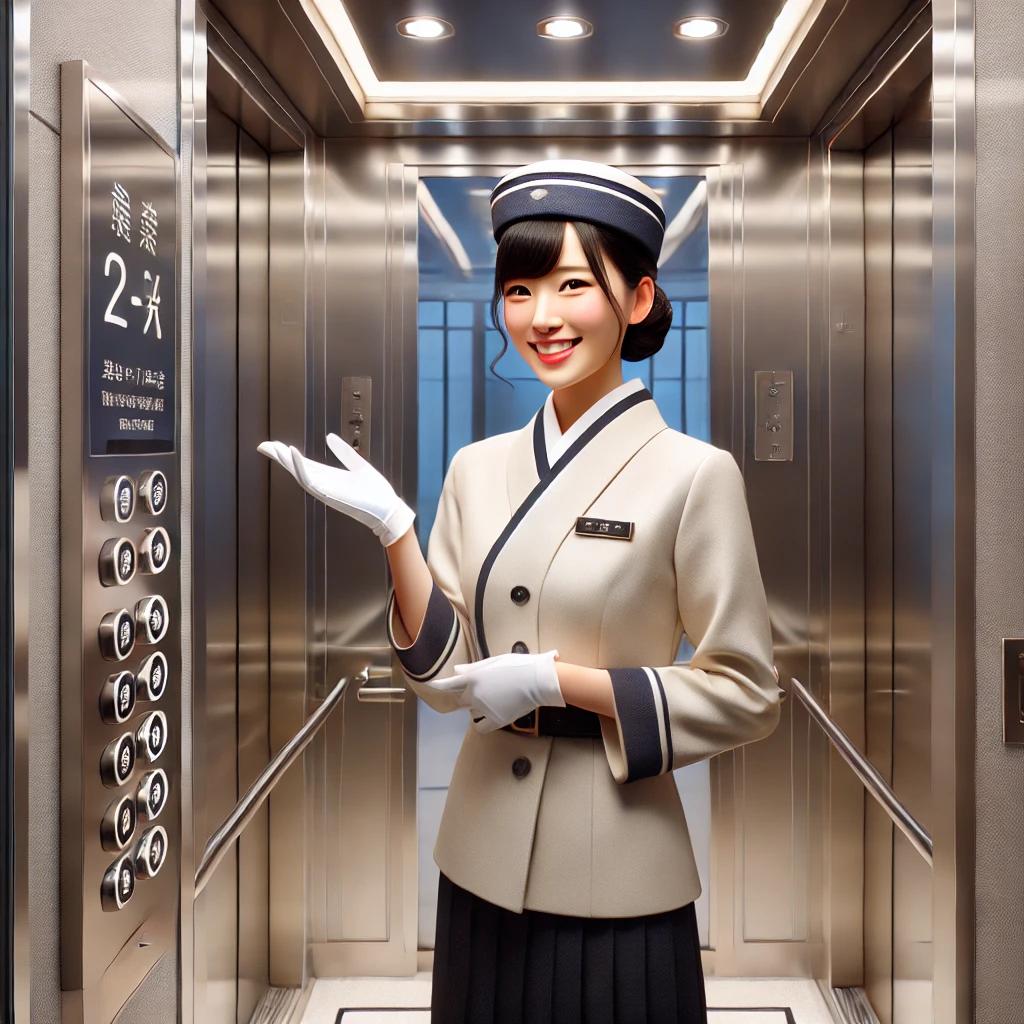
    • Elevator operators
    • Care workers (which are also rare in some parts of the world)
    • People handing out tissues on the street

    These are undeniably interesting, but what struck me most wasn’t the jobs themselves—it was the difference in customer service attitudes.
    In Japan, store clerks always say “Welcome” and “Thank you” with such warmth and attentiveness.
    Customer service in other countries, where clerks might not greet you, thank you, or even make eye contact with you, might shock some Japanese people; Though, I think Japanese customer service is simply an exceptional standard.

    Professions Reflecting Cultural Differences

    Just as monks are a familiar presence in Japan, pastors play a significant role in Christian societies.
    In Japan, monks undergo intensive training in temples, while pastors receive specialized education to become spiritual leaders.
    The cultural and environmental influences you grow up with shape not only your behavior but also the nature and roles of professions that may seem similar at first glance.
    This diversity highlights the richness of cultural differences and how they shape our understanding of even familiar roles.

    How about American Business Manners? Essential Tips

    If you’re stepping into American culture, here are some key business etiquette points to keep in mind:

    • Use First Names: In the workplace, people commonly address each other by their first names rather than using honorifics or formal titles.
    • Direct Communication: Americans appreciate clear and concise communication. Skip lengthy formalities and get straight to the point.
    • Punctuality: Just as in Japan, being on time is crucial in professional settings.
    • Handshake Etiquette: A firm handshake is considered a sign of confidence and respect, especially in formal or professional situations.
    • Respect Diversity: American workplaces value inclusivity and respect for diverse backgrounds and perspectives. Avoid discriminatory remarks and strive to create a welcoming environment.

    One challenge I faced was overcoming the hesitation to express my opinions.
    In English-speaking environments, where discussions and debates are the norm. Your silence might cause confusion.
    If you say, “I don’t share my thoughts,” you will be reprimanded. My reluctance to speak was seen as hindering teamwork.
    I have become more comfortable with sharing my opinions since then.
    This experience reminded me that the world is becoming more interconnected.

    Popular Careers in the U.S.

    If you’re considering working abroad, here are three sought-after professions in the United States:

    • Software Developer: As reliance on technology grows, software developers are in high demand to create and maintain various applications and systems.
    • Teacher: Educators play a vital role at all levels, from kindergarten to higher education, shaping the next generation.
    • Data Analyst: With the rise of data-driven decision-making, data analysts are essential for helping businesses interpret data and make informed choices.

    As an international student, you bring a global perspective, multilingual abilities, and cultural adaptability—all of which can set you apart from other candidates.
    Frame these strengths as assets to potential employers.
    For example:

    • Your ability to navigate diverse environments can translate into strong interpersonal and cross-cultural communication skills.
    • Language skills can be a major advantage for companies with international clients or global operations.

    Cultural differences can sometimes make U.S. job interviews feel intimidating. To prepare:

    • Research common interview questions and practice answering them confidently.
    • Learn about behavioral interviews, where employers assess how you’ve handled situations in the past.
    • Familiarize yourself with the company’s mission, values, and recent projects to show genuine interest.

    Practice with friends, mentors, or career advisors to refine your answers and improve your comfort level.

    Why don’t you take NYEA Private Lessons?

    To succeed in these careers, mastering English and honing additional skills are essential.
    Navigating the job market in the United States can be both an exciting and daunting experience, especially for international students.
    Balancing the challenges of immigration laws, cultural differences, and a competitive job market requires preparation and a strategy.
    At the New York English Academy (NYEA), private lessons are tailored to individual goals, focusing on areas like pronunciation, grammar, business etiquette, presentation skills, or specialized fields.
    Embarking on a career abroad involves challenges, but embracing cultural differences is as important as mastering language skills.
    With the support of New York English Academy, international students can confidently navigate these hurdles while enjoying a rewarding overseas experience.
    Step forward and enjoy New York!

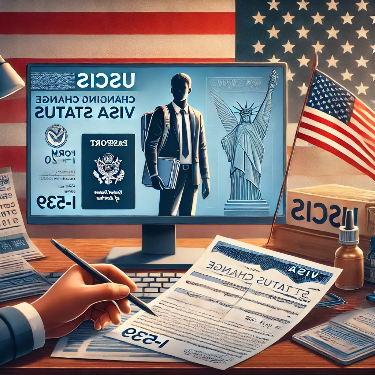
  6. The Status Change Process refers to the procedure for changing your visa status while staying in the U.S. This is particularly common for those switching from a non-immigrant visa such as a B visa or J visa to F-1 status, allowing them to study legally in the U.S. Below are important points to keep in mind during the status change process.

    Key Points in the Status Change Process

    • Eligibility for Status Change

      • To change to F-1 status, you must be in valid non-immigrant status at the time of application. Status changes are not permitted for individuals under the Visa Waiver Program (ESTA).
      • It is important to apply for a status change before your current visa expires. Delays in applying could result in falling out of status and possible unlawful presence in the U.S.
    • Required Documents

      • Form I-539: This form is used to apply for a status change with the U.S. Citizenship and Immigration Services (USCIS).
      • Form I-20: You will need a Form I-20 issued by your school, which certifies your acceptance and eligibility for F-1 status.
      • Supporting documents: You must also submit proof of financial support, a copy of your passport, your current visa, and any other required documentation.
    • Processing Time

      • The processing time for a status change can vary and may take several months. Therefore, it is crucial to apply early and be aware of the processing time.
      • You must maintain your current visa’s validity until the status change is approved. If your current status expires before approval, you may need to leave the U.S. and apply for an F-1 visa at the U.S. embassy in your home country. Be sure to consult with an immigration attorney for guidance.
    • Maintaining Status While Awaiting Approval

      • While waiting for your status change to F-1, you must comply with the terms of your current visa. For example, if you are staying on a B visa, you cannot start your academic program until your F-1 status is approved.
      • However, if you are switching from a J visa to an F-1 visa, you may be able to start your academic program before the F-1 approval.
    • Travel Restrictions

      • Leaving the U.S. while your status change application is pending will result in your application being considered abandoned. To return to the U.S., you would need to apply for an F-1 visa at the U.S. embassy or consulate in your home country.
    • Financial Considerations

      • You will need to provide proof of financial support to cover your studies in the U.S. This could include bank statements, affidavits of support, or scholarships that demonstrate your ability to pay for tuition and living expenses.
    • After Approval

      • Once you receive the approval letter, notify your school immediately. You must start your program on the appropriate start date.
      • The approval letter is not an F-1 visa itself; it is simply a notification that your status has changed to F-1. If you leave the U.S. and plan to re-enter, you will need both a valid F-1 visa and an I-20 to return. Since the approval letter is not a visa, you must apply for an F-1 visa at the U.S. embassy before re-entering the U.S.
      • The approval letter does not guarantee that your F-1 visa will be approved. If your visa application is denied, you will not be able to re-enter the U.S. Be sure to consult with an immigration attorney for any questions or concerns.
  7. When studying in the U.S. with an F-1 visa, it is crucial that both your visa and your I-20 remain valid.
    The I-20 is a vital document that outlines the period during which you are legally allowed to stay in the U.S. and pursue your studies.
    Below is essential information about maintaining the validity of your F-1 visa and I-20, as well as steps to take as their expiration date approaches.

    What is a Visa? What is an I-20?

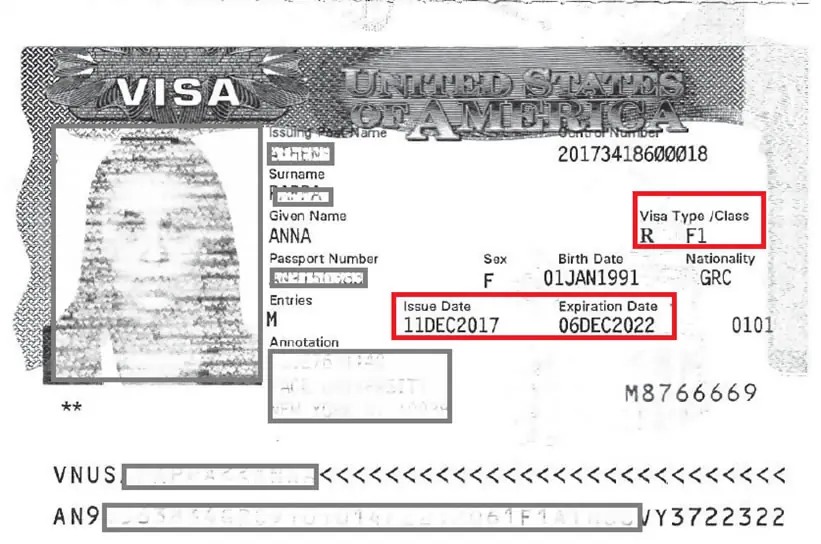
    • Visa: A visa is a stamp placed in your passport that permits you to enter the United States. The F-1 visa allows you to enter the U.S. as a student, but it does not determine how long you can stay. It only grants permission for entry. Having a valid visa does not guarantee 100% entry into the U.S.; the final decision is made by a CBP (Customs and Border Protection) officer upon your arrival.
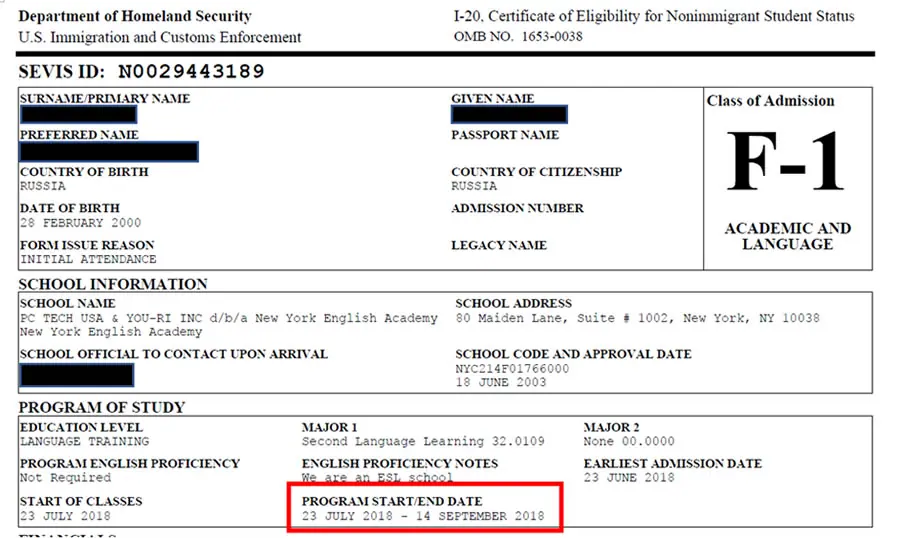
    • I-20: The I-20 is a document issued by your school that certifies your enrollment and eligibility to study in the U.S. It includes the start and end dates of your program, and it dictates the period during which you can legally remain in the country.

    These two documents serve different purposes, and their validity periods are not necessarily the same.
    The visa allows entry into the U.S., while the I-20 allows you to remain in the U.S. during your studies.

    Differences Between the I-20 and F-1 Visa Validity

    • I-20: The I-20, issued by your school, must remain valid throughout your enrollment. The first page of your I-20 indicates the authorized dates for your studies, and this determines your legal stay in the U.S.
    • F-1 Visa: The F-1 visa stamp in your passport indicates the period during which you are permitted to enter the U.S. as a student. In some cases, the F-1 visa may have a longer validity period than your I-20. For example, your F-1 visa could be valid for five years, while your I-20 covers a six-month program.

    Important:

    Even if your F-1 visa is valid, if your I-20 expires and no action is taken, your stay in the U.S. becomes illegal.
    Please talk to your school DSO.

    What is a DSO?

    A DSO (Designated School Official) is a critical figure at U.S. educational institutions, serving as the official liaison between the school, international students on F-1 visas, and the U.S. government.
    Appointed by the school and approved by the Department of Homeland Security (DHS), the DSO’s main responsibility is to ensure that both the school and its international students comply with all U.S. immigration regulations.

    Reasons Why Your I-20 Might Expire

    There are several reasons why your I-20 might expire, and it’s essential to be aware of these situations:

    • Completion of the Program

      The I-20 is valid for the duration of your program, as listed on the form. When your program ends, so does your I-20.
      After your program is completed, you will be granted a 60-day grace period during which you must transfer, enroll in another program, or leave the U.S.

    • Loss of Full-Time Enrollment Status

      If you fail to enroll in the required number of credits or do not maintain full-time status, you may lose your F-1 status.
      In this case, your school may terminate your I-20.

    • Withdrawal or Leave of Absence

      If you take a leave of absence or withdraw from your program, your I-20 may become invalid.
      These actions can lead to the loss of your legal stay in the U.S., so it’s crucial to consult with your DSO (Designated School Official) beforehand.

    • Failure to Pay Tuition

      Failure to pay tuition or prolonged unpaid tuition may result in your school terminating your I-20.
      Paying tuition is a requirement to maintain I-20 validity.

    • Unauthorized Employment

      F-1 visa holders are only permitted to work under specific conditions.
      Engaging in unauthorized employment, either off-campus or in a prohibited capacity, can result in the termination of your I-20, visa cancellation, and possible deportation.

    • Poor Attendance

      Many schools require students to maintain a certain attendance rate.
      If you fail to meet these requirements, your I-20 may be terminated.
      It’s critical to attend classes regularly and adhere to your school’s attendance policies.

    • Delay in Extending Your Program

      If you need to extend your program, you must apply for an I-20 extension before your current program ends.
      Failing to do so may result in the expiration of your I-20 and an illegal stay.

    What to Do When Your I-20 Expires

    If your I-20 is nearing its expiration date, you have three options:

    • Transfer to another school and obtain a valid I-20: You must obtain a new I-20 from the new institution.
    • Leave the U.S.: After completing your program, you are allowed a 60-day grace period during which you must depart the U.S.
    • Extend your program and obtain a new I-20 from your current school: If eligible, you may apply to extend your I-20 with your current school.

    If you successfully complete your program, you are allowed a 60-day grace period to take one of the above actions.
    This grace period allows you to legally remain in the U.S. during this time.

    Note:

    If you withdraw from your program or are dismissed, the grace period is reduced to 15 days.
    Staying beyond this period without taking appropriate action may result in an illegal stay, which can negatively impact your future ability to stay in or re-enter the U.S.

    What Happens if Your Visa Expires During Your Stay?

    As long as your I-20 remains valid, it is legal to stay in the U.S. even if your F-1 visa expires while you are here.
    However, if you leave the U.S. and wish to re-enter, you must have a valid visa.
    Therefore, you will need to renew your visa before re-entering the U.S.

    Important:

    Visa extensions cannot be done from within the U.S. You must leave the country and typically apply for a visa renewal at the U.S. embassy in your home country.

    What is Most Important for F-1 Visa Students?

    The most important thing for F-1 visa holders is to always maintain a valid I-20.
    As long as your I-20 remains valid, you can legally stay in the U.S. However, it’s crucial to take action promptly if your I-20 is nearing expiration.
    Always ensure that your stay and studies remain in compliance with U.S. immigration regulations.

    Additionally, keep up to date with F-1 visa regulations by checking the USCIS website and other official resources.

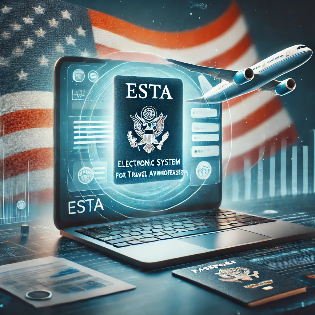
  8. The Electronic System for Travel Authorization (ESTA) is a program that allows citizens of Visa Waiver Program (VWP) countries to travel to the United States without a visa.
    This program is designed for short-term travel, such as tourism or business, but it is important to note that ESTA is not a substitute for a student visa.
    Below is an overview of ESTA and important points to keep in mind when applying.

    Overview of ESTA

    • Eligibility: Citizens of countries participating in the Visa Waiver Program (VWP) can apply for ESTA. The following countries are eligible:
      Andorra, Australia, Austria, Belgium, Brunei, Chile, Czech Republic, Denmark, Estonia, Finland, France, Germany, Greece, Hungary, Iceland, Ireland, Italy, Japan, Latvia, Liechtenstein, Lithuania, Luxembourg, Malta, Monaco, Netherlands, New Zealand, Norway, Portugal, San Marino, Singapore, Slovakia, Slovenia, South Korea, Spain, Sweden, Switzerland, Taiwan*, United Kingdom**
    • Purpose: ESTA can be used for tourism, business, medical purposes, or short-term study (fewer than 18 hours of classes per week). For long-term studies or full-time enrollment, a student visa is required.
    • Duration: ESTA allows you to stay in the United States for a maximum of 90 days. Staying beyond this limit is considered illegal, so make sure to depart the U.S. before your stay exceeds 90 days.
    • Important Note: ESTA is not a visa. You cannot change your status to another visa (such as an F-1 student visa) while staying in the U.S. on ESTA. If you need to switch to another visa type, you must leave the country and apply for the visa from abroad.
    • How to Apply: You can apply for ESTA online through the official U.S. Embassy website. The application fee is $14, payable by credit card.

    Important Points When Applying for ESTA

    • Apply Early: It is recommended to apply for ESTA at least two weeks before your trip, even though it can be done up to 72 hours before boarding your flight.
    • Validity: ESTA is valid for two years from the date of application, or until your passport expires, whichever comes first.
    • No Guaranteed Entry: Having an approved ESTA does not guarantee entry to the U.S. The final decision is made by U.S. immigration officials upon your arrival.
    • Beware of Overstaying: The maximum stay on ESTA is 90 days. Overstaying this limit is illegal, and you may be denied entry on future visits.
    • Answer Questions Carefully: The ESTA application process can be completed on a smartphone, but it is recommended to use a computer to ensure accurate answers to all important questions.

    Warnings for ESTA Users

    If you engage in illegal activities during your stay in the U.S., you may face future entry bans.
    Pay special attention to the following:

    • Overstaying: The maximum stay on ESTA is 90 days. Staying beyond this limit will result in illegal status and could lead to a denial of entry on future visits.
    • Illegal Employment: Working while on ESTA is prohibited. If caught working illegally, you could be banned from entering the U.S. again.
    • Other Illegal Activities: Fraud, theft, drunk driving, and illegal sexual activities are all considered serious offenses and can result in restrictions on future travel to the U.S.

    Enjoying a Safe Stay in the U.S. with ESTA

    ESTA is a convenient option for short-term travel to the U.S. for tourism or business, but there are several important rules and restrictions to keep in mind.
    By following these guidelines, you can ensure a safe and enjoyable stay in the United States.

  9. Undiscovered areas in big cities must excite you sometimes.
    Nowadays, social media (known as SNS in other countries) is a tool you use often to show your amazing experiences staying abroad.
    You will definitely find somewhere nice on the internet or in magazines, but there are places that won’t come up in a search.
    I mean, you might find something more interesting than just relying on information.
    So let me share my story of ‘’$1 Egg Sandwich with Plenty of Filling’’

    About 20 years ago, I was travelling around Europe. Near London Bridge in London, England, there was a small sandwich stall.
    It had no name and was tucked away in a quiet area with little foot traffic, giving it a “hidden gem” vibe that only a few knew about.
    It was lunchtime, so I decided to order an egg sandwich. The sandwich was filled with mashed eggs that I wondered just how many eggs they had used.
    It was almost entirely made of eggs, a hefty sandwich, and the price was an unbelievable $1 or so. Really. (At that time, sandwiches at convenience stores cost over $2.50.)
    It was so delicious; I have never tasted anything like that. Also, this memory still moves me today.
    I don’t know if that sandwich stall still exists, but if it does, I imagine it would be blowing up on social media. It’s a shame I don’t have a picture!

    Hidden gems like that often don’t show up in internet searches.
    If you happen to stumble upon one, it is just a miracle.
    You’ve probably searched for hidden places through travel guides, social media, and magazines.
    You feel something is still missing, and you want to visit a place no one else knows, but you’re not sure where to go. I believe there are always hidden gems in unexpected places.
    I might even call myself a budget travel enthusiast, and because I’ve wandered around Europe and Asia, I still tend to encounter rare finds.
    In a way, this habit might be helpful for you as well.

    Top 3 locations to discover a unique place

    On the main street, there are many major shops, and while you can enjoy those, there are also rare, cheap, and interesting ones in places that you wouldn’t expect.

    Maybe, these three places are where you can find hidden gems:

    • No.1: On the outskirts of the shopping street, along narrow, well-lit, and safe winding roads.
    • No.2: Find street performers, and there might be a hidden nice shop.
    • No.3: Residential areas.

    Here are some places I actually found from those places ranked in this top 3 list. Believe me, these stores did exist but aren’t listed on the internet now, and I’m sorry I can’t provide the name.

    • A super cheap pasta restaurant – It’s hard to notice because there’s no sign. You can order a large portion for around $2
    • A handmade furniture shop with high-quality, never-before-seen designs.
    • A cake shop where a single slice costs the same as at bulk retailers but is over three times the size.
    • A clothing store that only carries one-of-a-kind items.
    • A dairy shop where I discovered incredibly rich butter (at first, I thought it was cream!!).
    • A privately owned inn where they bring you anything you ask for (they even brought a TV when there wasn’t one in the room originally). Sounds great!?

    So,what do you find in NYC? OK, ready to find out? Then, be careful of city rules.

    It’s absolutely Instagram-worthy, but be cautious about this!

    For example, you might think that graffiti art is a great photo spot and a kind of ‘’Hidden Gem’’, but in New York City, graffiti is generally not permitted.
    Graffiti is usually considered an act of vandalism on public or private property and is seen as a violation of city laws and regulations.
    However, in certain designated locations, street art and graffiti are allowed.
    These areas are usually managed according to city guidelines and standards to ensure that the artwork is created properly.

    For example:

    • Graffiti Hall of Fame: Located in Harlem, Manhattan, this public space allows graffiti artists to legally create art on walls. It serves as a showcase for street art.
    • Welling Court Mural Project: A street art project in the Welling Court neighborhood of Queens, where artists create graffiti and street art on walls.
    • Bushwick Collective: In the Bushwick neighborhood of Brooklyn, artists create street art on various surfaces.

    Outside of these areas, graffiti is still illegal, and you could face penalties, so be careful when taking pictures!

    Is this okay to do?

    You often see street performances and want to take pictures! I get it.

    Who are those people, are they performing? And you might wonder, “Is it okay to do this without permission?” Here are some regulations in New York City:

    • Licenses: Some street performances may require a license from the NYC Department of Parks. For example, performances or events in parks must have a license.
    • Space and location: Street performances typically take place in public spaces like sidewalks and plazas where pedestrians walk. However, certain tourist spots or commercial areas may have restrictions on performances.
    • Consideration for those around: When performing on the street, it’s important to consider the safety and comfort of the people nearby. You must not obstruct pedestrian traffic and should be mindful of noise.
    • Performance content: Acts involving violence, extreme expression, or any illegal activity are not allowed.

    Additionally, what’s commonly associated with street performances is busking.

    This is show business.

    I used to think that the only people who could say the phrase “This is show business” without sounding out of place were the gentlemen in Hollywood working in the entertainment business.
    Street performances often include busking, where performers earn a little pocket money.
    But is this allowed?

    Of course, if you’re in the U.S. on an ESTA or tourist visa, earning money from busking would likely be illegal, especially if you make a lot (though I doubt anyone is making a fortune).
    However, it’s possible that during a short stay or a tour, you could perform and unexpectedly receive tips.
    While outright banning it would hinder the growth of the arts, this is a tricky issue. The safest course is for the performer to politely decline any tips.
    But unlike in Japan, the American show business system seems to guarantee appropriate compensation for professionals, which might be one of the reasons why entertainment thrives as a business there.
    You can’t deny the strength of that model.

    For artistic types, besides the student visa, there are these visa options:

    • O-1 Visa: A visa for artists and professionals with “extraordinary ability.” It’s granted to internationally recognized artists and cultural figures, as well as those with exceptional talent in the arts.
    • P Visa: A visa for artists or groups who will “perform.” There are three subcategories: P-1, P-2, and P-3 visas.
      • P-1 Visa: For individual or group artists and athletes participating in internationally recognized events or projects.
      • P-2 Visa: For artists or entertainers participating in a reciprocal exchange program.
      • P-3 Visa: For artists or entertainers participating in cultural programs or traditional performances.

    Skateboarding

    While people may not typically film it, skateboarding is a common sight in America, and I’ve known quite a few people who stay in New York specifically for skateboarding.
    Recently, skateboarding, which was invented in California, has gained worldwide attention, especially after a Japanese athlete won an Olympic gold medal in the sport.
    It has become so ingrained in everyday street life. I even know an older man from California who still uses a skateboard as his regular mode of transportation, which surprised me. He’s not trying to be cool, but somehow, he just looks effortlessly cool.

    In New York City, skateboarding is generally restricted on public sidewalks and roads.
    Since skateboarding can obstruct pedestrians and traffic, it is restricted in some public spaces and specific areas.
    However, New York City has several designated skate parks and skate spots.
    These parks and facilities are designed for skateboarding, allowing skaters to safely practice and perform tricks.
    Generally, it’s important to follow these guidelines when skateboarding:

    • Use designated skate parks: By using public skate parks or skate spots, you can enjoy skateboarding legally.
    • Avoid using sidewalks and roads: Skateboarding is often restricted on sidewalks and roads, so be sure to avoid using these areas.
    • Consideration for others: When skateboarding, work with nearby pedestrians and other users to ensure safe use.

    Hip Hop Culture

    This is the culture born in the Bronx, New York.
    You might discover an interesting aspect of New York tourism through it.
    One of the reasons people from all over the world want to visit New York is due to the influence of hip-hop.
    Many people visit the city seeking its music, cutting-edge entertainment, and art.
    When you hear the word “hip-hop,” rap and dance probably come to mind right away, but in a nutshell, hip-hop is a culture that combines four elements: rap, graffiti, dance, and DJing.

    As you walk through New York, you might think, “This feels so authentic!” when you see people’s fashion or hear music playing randomly on the street.
    When I first listened to American radio, I was amazed at the variety of music programs.
    Many people in New York work in these kinds of creative fields, so the average level of artistic talent is high! You might think, “Is this person a singer?” only to find out they’re a freelancer aiming to become one.

    If you discover any rare tourist spots, leave a comment and let us know.

    Enjoy NY!

  10. I once stayed at a stylish hotel with a pool, located in a city in the U.S. near mansions of celebrities.
    The hotel had a fitness gym in the basement, but despite being such a luxurious place, there was a problem: I found myself in trouble in the bathroom.
    During my stay, I ended up having a fear of using the toilet for about a week, which mentally drained me and even affected my job.
    This article may help you think about what to do in case of emergencies abroad, as things can get quite serious if you’re not prepared — especially when it comes to bathrooms, hahaha.

    One of the issues that always crosses my mind when travelling abroad is, “Can I easily find a toilet?” The issue of toilets is a common concern for many travelers.
    Like in Japan, if you’re in trouble, you can almost always find a clean, free toilet at convenience stores or large retail stores.
    However, not all countries are like that.

    Paper or $1

    For example, during a trip to Amsterdam, Netherlands, I once rushed into a fast-food restaurant, thinking “It’s Amsterdam, a famous city, surely they’ll let me use the bathroom.” However, just before entering, an elderly woman stopped me. (Right there!)
    She wasn’t a staff member, just an old lady with a bent back, and she charged me about 2 euros (around $1.50 at the time) as an entry fee to use the bathroom.
    Because I was in an emergency, I had no choice but to pay, even though there was no toilet paper, and the water pressure was low!
    I couldn’t believe I had to pay an entry fee for a bathroom without paper.
    Looking back, I regret not doing proper research beforehand.
    I can’t remember exactly: was it 2 euros? 1 euro? Whatever, anyway, it was a crazy amount for me, and I recall negotiating because I didn’t have exact change!
    Why was the old lady even there?
    Was she hired by the restaurant? I left the place feeling conflicted.

    Here is another story from Asia

    About 20 years ago, my friend travelled to Japan, and at the airport’s security check, they found “toilet paper” in her suitcase.
    They asked her, “What’s this?” and ended up confiscating it.
    Maybe toilet paper was rare there because toilets are so clean in Japan, and you do not bring toilet paper with you! They must have thought carrying toilet paper was so weird.
    Also, you might encounter misunderstandings like in Japan, because a lot of the toilet manners and instructions are written in Japanese, and once a friend whispered to her, “I don’t know how to flush it.”

    How about New York?

    In New York, many building bathrooms are locked, and without knowing the code, you can’t use them.
    It’s common to see people wandering around, unsure of the code.
    This is likely a safety measure to prevent crimes in restrooms.

    Top 5 places you can use a bathroom in the U.S.:

    • Public facilities
    • Restaurants
    • Shopping malls
    • Hotels
    • Gas stations

    Note: However, it’s best not to assume you can use these facilities freely.
    It’s a good idea to ask the staff for permission first.

    To avoid trouble with bathrooms when travelling abroad:

    Research and preparation in advance: Before your trip, research the bathroom situation at your destination.
    Check the types of bathrooms, how to use them, and how to dispose of toilet paper.
    It’s also helpful to prepare items like toilet paper and hand sanitizer to bring with you for when you need to use the bathroom abroad.

    Precautions when using public restrooms: Pay attention to cleanliness when using public restrooms.
    Bringing items like toilet seat covers or portable toilet sheets will allow you to use the bathroom more hygienically.
    Additionally, after using the restroom, make sure to wash your hands thoroughly to maintain cleanliness.

    Essential items: There may be times when toilet paper is not provided at your destination.
    It’s convenient to carry tissues, wet wipes, or pocket-sized toilet paper.
    Also, having hand sanitizer or disinfecting wipes will help maintain a hygienic state.

    Use of a dedicated pouch or bag: Having a dedicated pouch or bag to organize toilet-related items and hygiene products makes it easy to access them and keeps them neatly arranged.
    For extra cleanliness, prepare disposable plastic bags to store used items.

    Practice good manners: Respect the local toilet culture and manners of your travel destination.
    This includes lining up, waiting your turn, and properly disposing of toilet paper and trash.
    Always try not to inconvenience the locals.

    What if you’re traveling to a place with no bathrooms?
    If you are camping overseas, which some people enjoy, you can also refer to these camper-friendly measures:

    Natural bathroom: In outdoor settings, you can relieve yourself naturally.
    Choose an appropriate place, away from frequently travelled paths.
    Dig a hole to dispose of solid waste, and after finishing, remember to cover it back up.

    Portable toilet: If there are no bathrooms at the campsite or while you’re on the move, you can use a portable toilet.
    These are compact and easy to carry, with special bags or systems to handle waste.
    Follow the instructions for proper disposal and keep it clean.

    Alternative methods: There are alternative methods you can use instead of a bathroom.
    For example, if you have a camper, you can use the bathroom inside.
    As a temporary solution, you could even create a portable toilet from a plastic bag.
    In environments without toilets, it’s important to be mindful of the environment and avoid negatively impacting nature.
    Always take your trash with you and respect the natural surroundings.
    Also, make sure to follow local rules and regulations.

    So, which country is the most convenient in the world?

    Well, I have travelled a lot overseas, and now I think we can make our life as convenient as we want if we can prepare enough for any circumstances.
    So, I recommend ‘’Search’’ for your comfortable life while staying abroad.

    Enjoy NY!